
Traceability
Don't take our word for it. Check the lot yourself.
Traceability is the backbone of everything the Consortium does. Every pack of saffron carries a QR code, and that code is not decoration: it opens the full record of the exact lot in your hands, from the field it grew in to the laboratory that measured it.
Most saffron on the market asks you to trust a brand. Ours asks you to verify a lot. The difference is the whole point of this page.
The scan
One scan, the whole story of the lot.
Scan the QR code on the pack. It opens a page built for that exact lot, with four things.
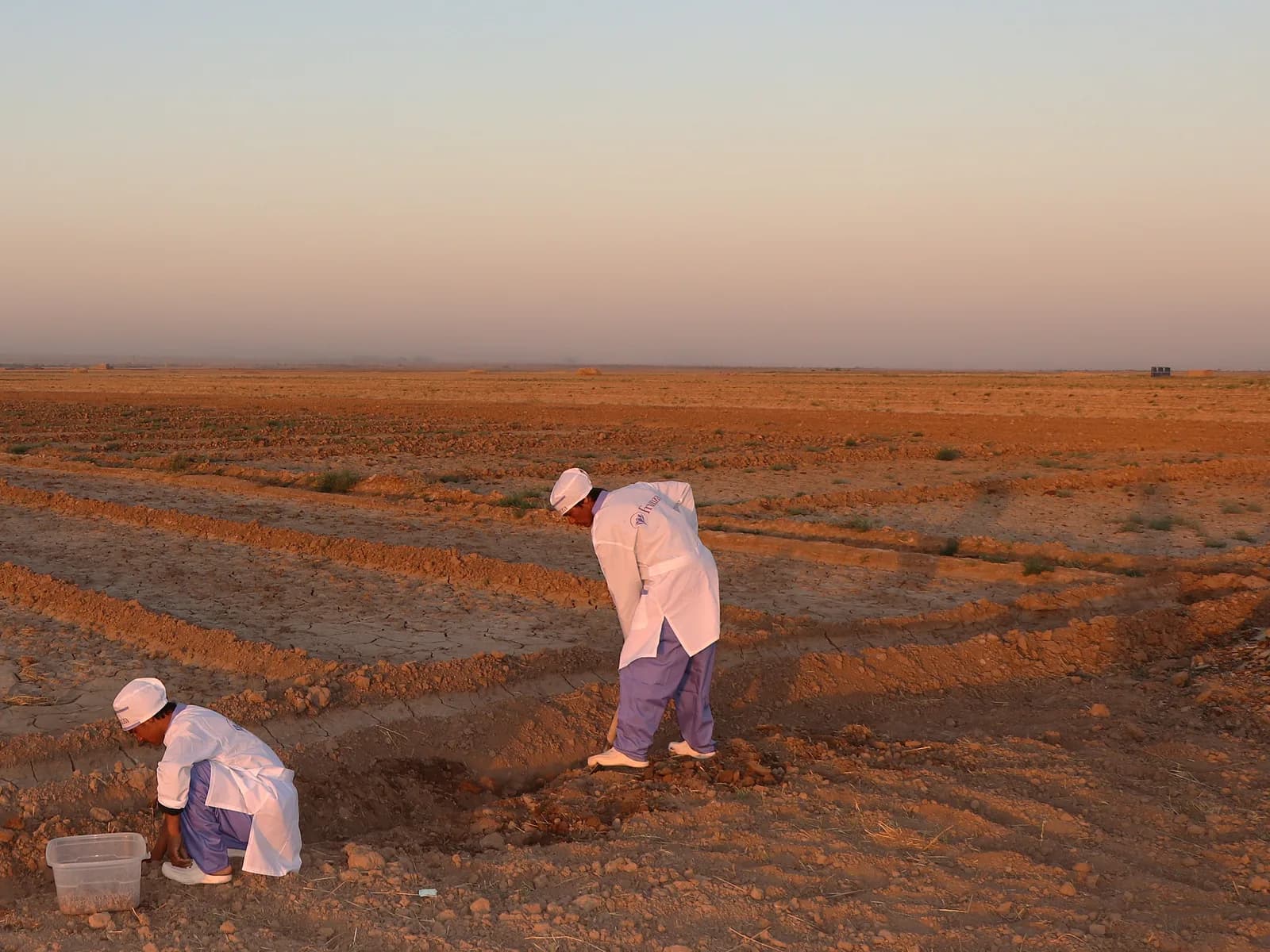
Where it grew.
A satellite view of the cultivation areas behind the lot, in the Herat region.
Documentation
Every lot ships with its paperwork, not just its promise.
The QR code is the easy way in, but the underlying documents are the substance. For every lot we ship, three documents travel with the goods and are available to the buyer:
- ISO 3632 analysis.
- The laboratory measurement of the lot's color, aroma and taste parameters, plus moisture, ash and foreign matter, so the quality is stated in numbers, not adjectives.
- Certificate of origin.
- Confirming the saffron was grown and packed at origin.
- Phytosanitary certificate.
- The plant-health document required for international shipment.
Beyond the origin analysis, the Consortium runs an extended testing program in international certified laboratories in Europe and the Emirates, covering the parameters that cannot yet be measured in Herat: pesticide residues, ochratoxins, heavy metals, microbiology and DNA authenticity screening. This is the same battery of controls demanded of European producers, and the Consortium meets it, with an exact, lot-level traceability back to the grower.
The lot code
Every pack is tied to one lot, and one lot only.
Each pack carries a lot code, the same code the QR resolves to. It is the thread that ties the pack in your hand to a single, documented batch: the growers who supplied it, the analysis that measured it, and the shipment it travelled in. Two packs from two different lots carry two different records. Nothing is generic.
Under the hood
Recorded from the field, held in one registry.
For buyers who want to look under the hood, the traceability is not added at the end, it is built from the first step:
Recorded at the field.
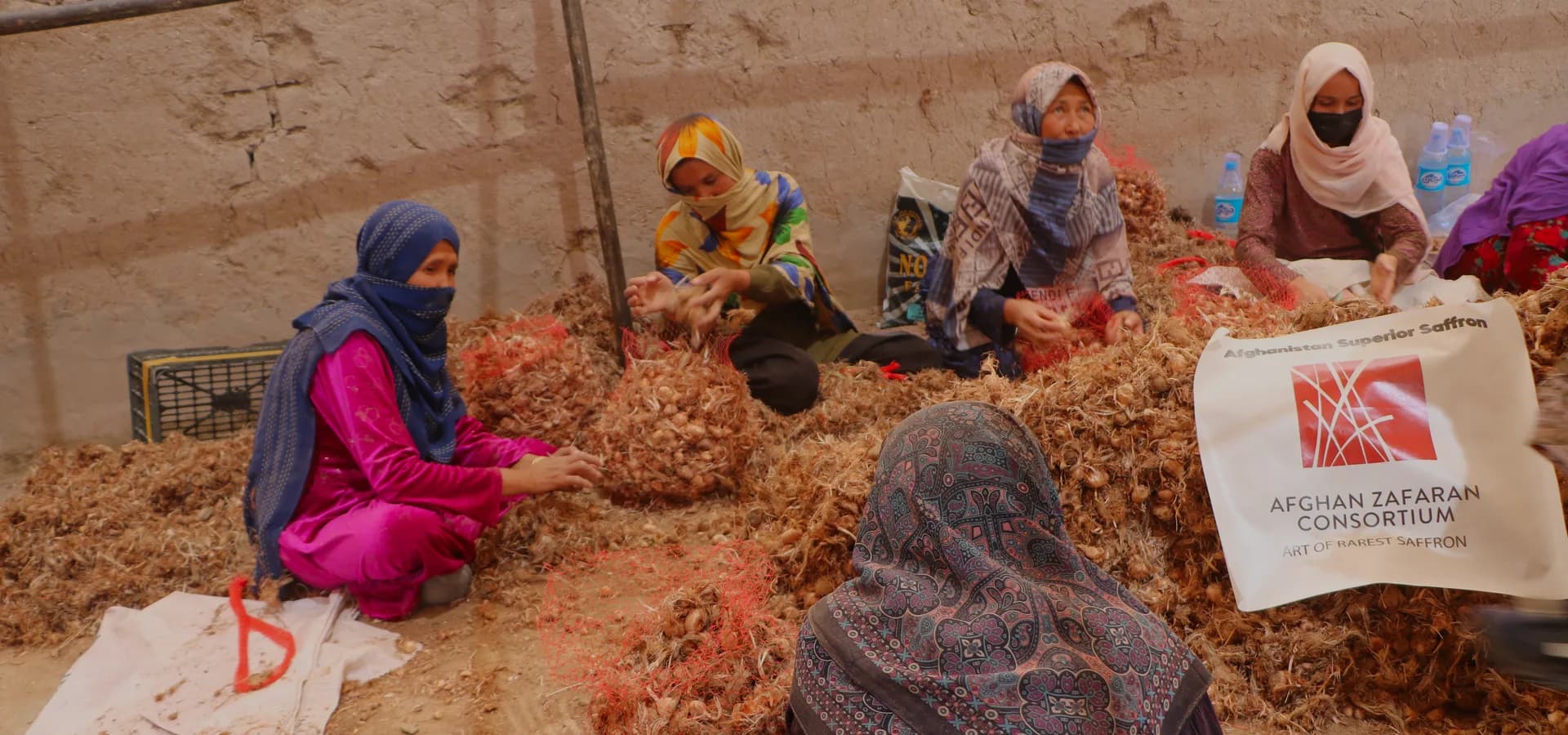
When the member producers purchase from the growers, each purchase is recorded: who grew it, in which area, how much, and when it was harvested.
Held in a central registry.
Those records are kept in the Consortium's central traceability registry in Herat, so a lot can be traced back to its growers at any point.
Carried to the pack.
When the saffron is processed and packed, the lot keeps its identity through to the QR code on the finished pack, and the analysis and documents are attached to that same lot.
The value chain
Five hands, one lot number.
The pack changes hands five times between the field and the kitchen. The code on it does not change at any of them.
The farm.
Growers across the Herat region pick the flowers and separate the stigmas the same day.
The processing center.
Dried, graded and packed at origin. The lot takes its number here, before anything is sealed.
The airport.
Sealed cases leave by air with the certificate of origin and the phytosanitary certificate.
The importer.
Cleared and stored at destination. The goods change hands; the lot number does not.
The chef.
The pack is opened in a kitchen, and the code still opens the record it left Herat with.
Verify
The proof travels with the product.
Wherever a pack of Consortium saffron ends up, its record travels with it. Scan, and see for yourself.